For grain traders operating in the agricultural futures markets, few calendar events carry as much market-moving weight as the release of the World Agricultural Supply and Demand Estimates (WASDE) report. Published monthly by the United States Department of Agriculture (USDA), this comprehensive document serves as the bedrock for fundamental analysis.
When the report drops, automated algorithms and seasoned floor traders instantly parse the balance sheets to reprice corn, soybeans, and wheat futures. To stay ahead of the volatility, you need to know exactly which metrics matter most.
1. U.S. and Global Ending Stocks
Ending stocks represent the leftover supply at the end of a marketing year. For traders, this is arguably the most critical psychological and mathematical figure in the entire report.
-
Why it matters: It directly dictates the stocks-to-use ratio—a key gauge of market tightness.
-
Trading Impact: If ending stocks come in lower than trade expectations, it signals tight supplies, often triggering an immediate bullish rally in futures. Conversely, a higher-than-expected cushion points to oversupply, driving prices downward.
2. Yield per Harvested Acre
Crop production is a simple equation: Harvested Acres multiplied by Yield per Acre. While acreage figures get plenty of attention during spring planting reports, the monthly adjustments to yield updates throughout the growing season command the market’s immediate focus.
-
Why it matters: Small adjustments to per-acre yields—even a fraction of a bushel—can translate into tens of millions of bushels added or erased from total national production.
-
Trading Impact: Weather shocks, droughts, or unexpected disease pressures reflected in yield revisions routinely spark sharp intraday reversals.
3. Total Production Figures
Directly derived from acreage and yield metrics, the aggregate production line item gives traders the absolute volume of the new crop entering the market pipeline.
-
Why it matters: It sets the baseline supply side of the domestic and global balance sheets.
-
Trading Impact: Surprises in production figures relative to pre-release analyst estimates routinely set the tone for multi-week price trends in grain futures contracts.
4. Export Projections
Global trade dynamics hinge heavily on U.S. export demand, particularly for corn, soybeans, and wheat. The WASDE report details how much grain foreign buyers are expected to purchase.
-
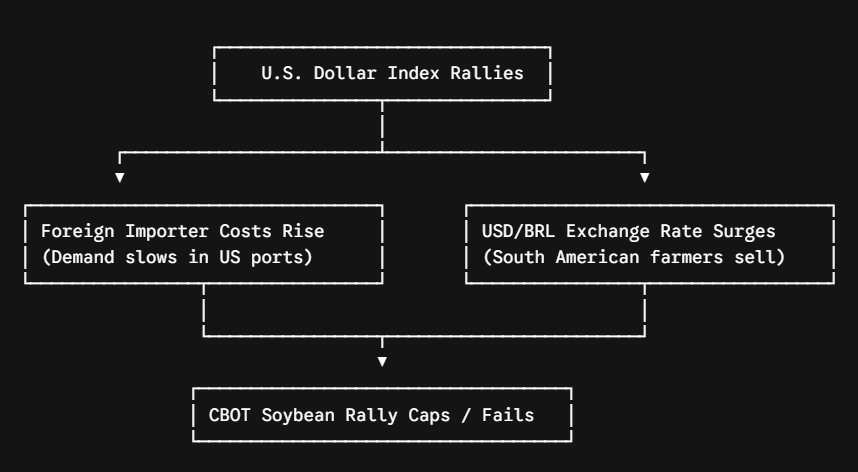
Why it matters: Shifts in international trade flows, currency fluctuations, and geopolitical trade agreements all feed into this number.
-
Trading Impact: An upward revision in export forecasts implies robust global consumption and tighter domestic availability, offering a strong bullish catalyst for futures contracts.
5. Feed, Residual, and Industrial Usage (FSI)
Demand isn’t just about exports; domestic consumption plays a massive role. This category tracks grain utilized for livestock feed, seed, and industrial purposes—most notably corn going toward ethanol production.
-
Why it matters: Industrial demand remains relatively steady, but livestock feeding margins and biofuel blending mandates can alter consumption paths rapidly.
-
Trading Impact: Weakening or strengthening domestic demand alters the ending stocks equation, quietly shifting market sentiment beneath the surface.
Final Thoughts
Mastering the balance sheets inside the WASDE report allows traders to look past short-term noise and anchor their positions in hard supply-and-demand fundamentals.